
As the leaves begin to change color and temperatures start to drop in Greenville, SC, homeowners naturally turn their attention to preparing their properties for the fall season. While tasks like gutter cleaning and HVAC maintenance often top the list, one critical area that shouldn't be overlooked is your home's security system, particularly your locks and entry points. Fall presents unique challenges for home security, from increased home invasions during darker evenings to weather-related wear on exterior hardware. This comprehensive locksmith checklist will help ensure your Greenville home remains secure and functional throughout the autumn months and into winter.
Why Fall Lock Maintenance Matters in Greenville
Greenville's climate during fall creates specific conditions that impact your home's locks and security hardware. The region experiences fluctuating temperatures, increased humidity from fall rains, and early darkness that can affect both your security needs and the physical condition of your locks.
Temperature fluctuations between warm days and cool nights cause metal components in locks to expand and contract repeatedly. This constant movement can gradually loosen screws, misalign strike plates, and create gaps in door frames that compromise security. Additionally, fall moisture from rain and morning dew can lead to rust formation in exposed hardware, potentially causing locks to stick or fail when you need them most.
The earlier sunsets during fall also correlate with increased break-in attempts. According to FBI statistics, burglaries increase during fall and winter months, with peak activity occurring between 6 PM and 6 AM. As daylight hours diminish, criminals have more cover of darkness to operate, making robust locks and security measures increasingly important.
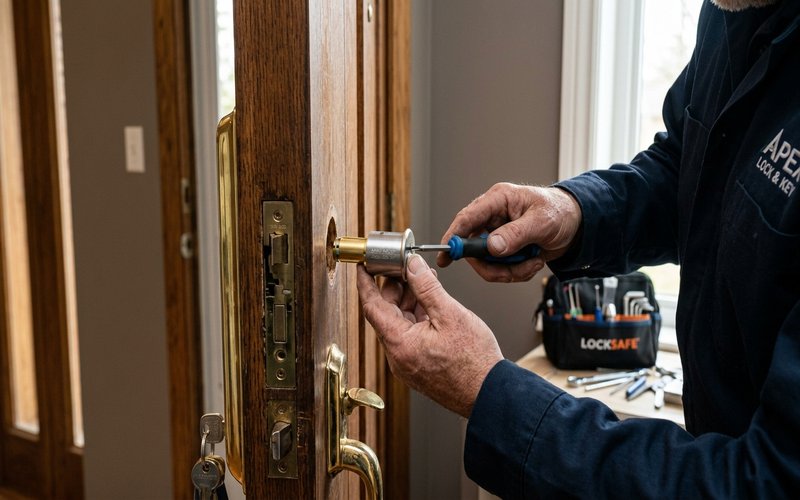
Proactive fall maintenance prevents emergency lockout situations during cold weather and ensures your security systems function optimally when you need them most. Taking time now to inspect and upgrade your locks can save considerable stress, expense, and potential security breaches later.
Inspect All Entry Point Locks
Begin your fall locksmith checklist by conducting a thorough inspection of every lock on your property. This includes obvious entry points like front and back doors, as well as frequently overlooked areas such as basement doors, garage entries, and gates.
Start by testing each lock multiple times. Insert the key and turn it slowly, paying attention to any resistance, grinding sensations, or difficulty engaging the bolt. Locks should operate smoothly without requiring excessive force. If you notice any sticking or resistance, this indicates internal wear or debris accumulation that needs addressing.
Examine the physical condition of each lock cylinder. Look for signs of rust, corrosion, or weather damage, particularly on exterior doors. Check for loose mounting screws and tighten any that have worked themselves free over time. Inspect the strike plate—the metal plate on the door frame where the bolt enters—ensuring it's securely fastened and properly aligned with the lock bolt.
Pay special attention to deadbolts, which provide your primary security against forced entry. Quality deadbolts should extend at least one inch into the door frame. Test this by closing the door and engaging the deadbolt, then examining how far it extends. If the throw is less than one inch, consider upgrading to a more secure model.
Don't forget to inspect sliding door locks. These entry points are often targeted by burglars because they typically have weaker locking mechanisms. Ensure the lock engages fully and consider adding a security bar or blocking rod for additional protection.
Clean and Lubricate Your Locks
Once you've completed your inspection, the next critical step is proper cleaning and lubrication. Over time, locks accumulate dust, dirt, and debris that impede smooth operation. Fall is the perfect time to give your locks the maintenance they deserve before winter weather arrives.
Begin by using compressed air to blow out any loose debris from the keyway and internal mechanisms. Hold the can upright and use short bursts to avoid moisture buildup. This simple step removes surprising amounts of accumulated dust and particles.
For cleaning, avoid using water-based cleaners or WD-40, despite its popularity. WD-40 is a degreaser and solvent rather than a true lubricant, and it can actually attract more dirt over time. Instead, use a specialized lock lubricant such as graphite powder or a Teflon-based dry lubricant.
To apply graphite powder, insert the nozzle into the keyway and give it a gentle squeeze, then insert your key and work it in and out several times to distribute the lubricant throughout the internal pins and springs. Wipe away any excess from the exterior of the lock.
For spray lubricants, apply sparingly. A little goes a long way, and excess lubricant can actually gum up the mechanism or attract dirt. After applying, insert the key and turn the lock several times to work the lubricant into all moving parts.
Don't forget to lubricate door hinges as well. Squeaky or stiff hinges create stress on locks and can cause doors to sag over time, leading to misalignment issues. Apply a drop of light machine oil to each hinge and work the door back and forth to distribute it evenly.
Check Door and Frame Alignment
Even the highest-quality lock provides minimal security if the door doesn't properly align with its frame. Seasonal changes in humidity and temperature cause wood doors and frames to expand and contract, potentially creating alignment issues that compromise both security and functionality.
Close each door and observe the gap between the door and frame. It should be consistent all the way around, typically about the width of a nickel. If you notice the gap is wider on one side or if the door appears to hang crooked, adjustment is needed.
Test the door by trying to move it while closed. Excessive movement indicates loose hinges or a door that doesn't fit snugly in its frame. Check whether the lock bolt fully enters the strike plate opening. If it only partially engages or misses the opening entirely, the door requires realignment.
Look for light coming through around the door edges when it's closed, which indicates gaps that compromise both security and energy efficiency. Similarly, check for drafts by holding your hand near the door edges on a windy day.
For minor alignment issues, tightening hinge screws often resolves the problem. If screws won't tighten because the holes have become stripped, remove the screw, insert wooden toothpicks or matchsticks coated with wood glue into the hole, let dry, then reinsert the screw for a tight fit.
More significant alignment issues may require shimming hinges or planing the door edge. These tasks are best left to professional locksmiths who have the tools and expertise to make precise adjustments without damaging your door or frame.
Upgrade to High-Security Locks
Fall represents an ideal time to evaluate whether your current locks provide adequate protection for your home and family. If your locks are more than a few years old or if you've experienced any security concerns, consider upgrading to high-security options.
Modern high-security locks offer significant advantages over standard residential locks. They feature pick-resistant cylinders, drill-resistant components, and reinforced construction that withstands common forced-entry techniques. Many also use restricted keyways, meaning keys cannot be duplicated at typical hardware stores without proper authorization, giving you better control over who has access to your home.
Deadbolts with ANSI Grade 1 ratings provide the highest residential security level. These locks undergo rigorous testing for durability, strength, and resistance to manipulation. While they cost more than standard locks, the investment in peace of mind and actual security is substantial.
Smart locks represent another upgrade option worth considering. These devices allow you to lock and unlock doors remotely via smartphone apps, grant temporary access to visitors or service providers, and receive notifications when doors are opened or left unlocked. Many integrate with home automation systems and can be programmed to lock automatically at specific times or when you leave home.
When selecting smart locks, choose models from reputable manufacturers with proven cybersecurity measures. The lock should offer encrypted communication and require strong authentication to prevent hacking. Look for products certified by organizations like ANSI/BHMA for physical security and UL for electronic security.
Address Weather Stripping and Seals
While not strictly a locksmith concern, weather stripping around doors directly impacts lock functionality and home security. Deteriorated weather stripping allows doors to shift within their frames, potentially causing lock alignment issues and creating gaps that compromise security.
Inspect the weather stripping around all exterior doors. Look for cracks, compression, gaps, or sections that have pulled away from the door or frame. Quality weather stripping should form a complete seal when the door closes, with no visible gaps or light penetration.
Replace any damaged weather stripping before cold weather arrives. This not only improves security but also enhances energy efficiency, potentially reducing heating costs during Greenville's winter months. Various types are available, including adhesive-backed foam, V-strip, and door sweeps for the bottom edge.
For doors with significant gaps at the bottom, install or replace door sweeps. These create a seal against the threshold, preventing drafts and making it more difficult for intruders to use tools to manipulate interior locks.
Test and Replace Keys
Fall maintenance should include a careful evaluation of all keys used to access your home. Worn or damaged keys can break inside locks, leading to expensive emergency lockout situations at the most inconvenient times.
Examine each key for signs of wear, including rounded teeth edges, cracks, or bending. Keys that feel loose in the lock or require wiggling to work properly should be replaced. Even if a worn key still functions, it places additional stress on the lock's internal pins and can accelerate lock wear.
Make copies of important keys before winter arrives, ensuring you have spares available if a key is lost or damaged. Have copies made by a professional locksmith rather than at typical key-cutting kiosks, as professional locksmiths use higher-quality blanks and precision equipment that produces more accurate duplicates.
Consider implementing a key management system for your household. Know exactly how many keys exist for each lock and who has them. If you've given keys to former contractors, housekeepers, or other service providers who no longer need access, have your locks rekeyed for security.
Inspect and Service Your Garage Door Locks
Garage doors represent a commonly overlooked vulnerability in home security. Many homeowners rely solely on electric opener systems without maintaining proper manual locks, creating an easy entry point for intruders who can defeat or bypass automatic openers.
Test your garage door's manual lock mechanism if equipped. Many modern garage doors lack manual locks entirely, relying only on the electric opener. If your garage provides access to your home's interior, this creates a significant security gap worth addressing.
Inspect the garage door opener's safety and security features. Modern openers should use rolling code technology, which changes the access code each time the remote is used, preventing code-grabbing devices from capturing and replaying the signal. If your opener is more than 10-15 years old, it may lack this critical security feature.
Check the emergency release mechanism to ensure it functions properly but cannot be easily accessed from outside the door. A common burglary technique involves fishing a coat hanger through the top of the garage door to pull the emergency release. Install a shield or zip-tie the release lever to make this technique more difficult while still allowing emergency access from inside.
Consider adding a slide lock or deadbolt to your garage door for times when you're away for extended periods. This physical barrier provides security even if someone manages to defeat the electronic opener.
Rekey Locks if Needed
Fall represents an excellent time to consider rekeying locks, particularly if you've experienced turnover in who has keys to your home. Rekeying changes the internal pin configuration of a lock so that old keys no longer work, providing security without the expense of completely replacing hardware.
Situations that warrant rekeying include moving into a previously owned home, ending a relationship with someone who had keys, losing track of how many key copies exist, or experiencing an attempted break-in. Even if you trust everyone who currently has keys, you can't control whether they've adequately secured those keys or if copies have been made without your knowledge.
Rekeying offers significant advantages over complete lock replacement. It costs considerably less while providing the same security benefit of rendering old keys useless. The process typically takes only minutes per lock, and a skilled locksmith can rekey all locks to work with a single key for added convenience.
For maximum security and convenience, consider having all exterior locks rekeyed to match. Using one key for all entrances simplifies your life while ensuring consistent security across all access points. This also makes it easier to control access by changing just one key if security is compromised.
Secure Vulnerable Entry Points
Beyond standard doors, homes contain numerous other entry points that deserve attention during your fall security assessment. Burglars often target these less-obvious access points because homeowners typically invest less security attention on them.
Basement windows and doors frequently receive inadequate security measures. Inspect all basement access points and ensure they have functional locks. Consider adding window security film or bars for ground-level basement windows, and ensure basement door locks are equal in quality to your main entry locks.
Slidng glass doors pose particular security challenges because their locking mechanisms are often weak. In addition to maintaining the built-in lock, add a security bar or blocking rod in the track to prevent the door from being forced open even if the lock is defeated. Place a wooden dowel cut to length or purchase an adjustable security bar designed for this purpose.
Bulkhead doors providing basement access should have robust locks and be checked regularly. These are often targeted because they're not visible from the street and can be pried open if not properly secured.
Don't overlook access points like pet doors, which can be exploited by intruders, particularly if they're large enough for a person to fit through. Consider electronic pet doors that only open for pets wearing a special collar device, or ensure manual pet doors have lockable covers that can be secured when you're away.
Install or Maintain Security Hardware
Beyond locks themselves, various security hardware additions significantly enhance home protection. Fall provides an ideal opportunity to install or maintain these supplementary security measures.
Door reinforcement kits strengthen the weak points in typical door installations. These typically include long strike plates that attach with 3-inch screws extending into the wall stud, door jamb reinforcement plates, and hinge shields. Together, these components dramatically increase the force required to kick in a door, often making forced entry impossible without power tools.
Check existing security hardware for signs of wear or damage. Strike plates should be securely fastened with long screws, not the short screws typically included with standard lock installations. If strike plates show signs of attempted forced entry or damage from previous break-in attempts, replace them with reinforced versions.
Consider installing peepholes or doorbell cameras if you don't already have them. Being able to see who's at your door without opening it provides both security and convenience. Modern video doorbells offer the added benefit of recording visitors and allowing you to communicate with people at your door even when you're not home.
Window locks deserve attention as well, particularly on ground-level windows. Many standard window locks are flimsy and easily defeated. Upgrade to keyed window locks for maximum security, or install simple pin locks that prevent windows from being opened even if the main lock is defeated.
Consider Professional Security Assessment
While homeowners can accomplish many security improvements independently, a professional locksmith brings expertise and perspective that's difficult to replicate. Professional security assessments identify vulnerabilities you might overlook and provide customized recommendations based on your specific property and circumstances.
Professional locksmiths evaluate your property with an experienced eye, identifying weak points in your security and suggesting practical improvements. They understand current burglary techniques and know which security measures actually work versus which simply create a false sense of security.
During an assessment, a locksmith examines all entry points, tests lock functionality, evaluates door and frame integrity, and assesses your overall security approach. They can identify whether your locks meet industry standards for residential security and recommend specific upgrades that fit your budget and needs.
Professional locksmiths also provide valuable guidance on key control, helping you implement systems that track who has access to your home. They can advise on whether to implement a master key system, switch to restricted keyways, or transition to electronic access control.
Prepare for Emergency Lockout Situations
Even with the best maintenance, lockout situations occasionally occur. Preparing for this possibility before it happens reduces stress and prevents expensive emergency service calls or desperate measures that damage your property.
Consider where you'll keep spare keys and ensure your solution is genuinely secure. Hiding keys under doormats, in fake rocks, or above door frames provides no real security, as these are the first places burglars check. Instead, leave a spare with a trusted neighbor or family member who lives nearby.
Another option is installing a key